Research
Our research projects at the intersection of human-robot interaction, collaborative autonomy, and machine learning.
Ongoing Projects
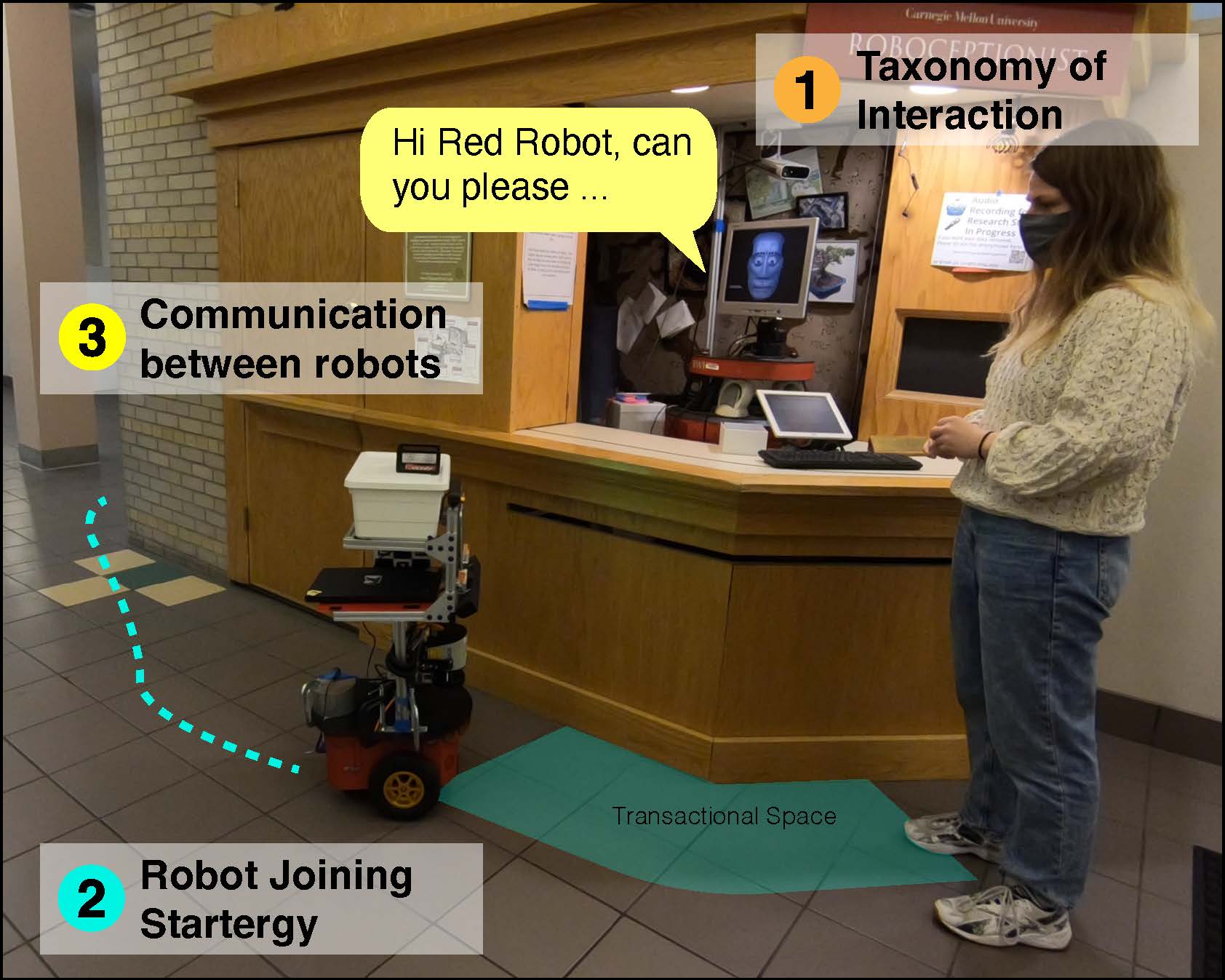
Sequential Human Interaction with Multiple-Robots
Our future likely involves humans interacting with multiple robots, whether because the first robot lacks the capability to complete the task, is more efficient, or the service requires the usage of multiple robots. In this line of work, we explored how to design sequential interaction with multiple robots. We created a taxonomy for this space [HRI’21], understood how robots should talk to each other [HRI’19], created strategies for robots joining an existing one-on-one interaction [ICMI’22], and deployed our system in the field [RO-MAN’24].
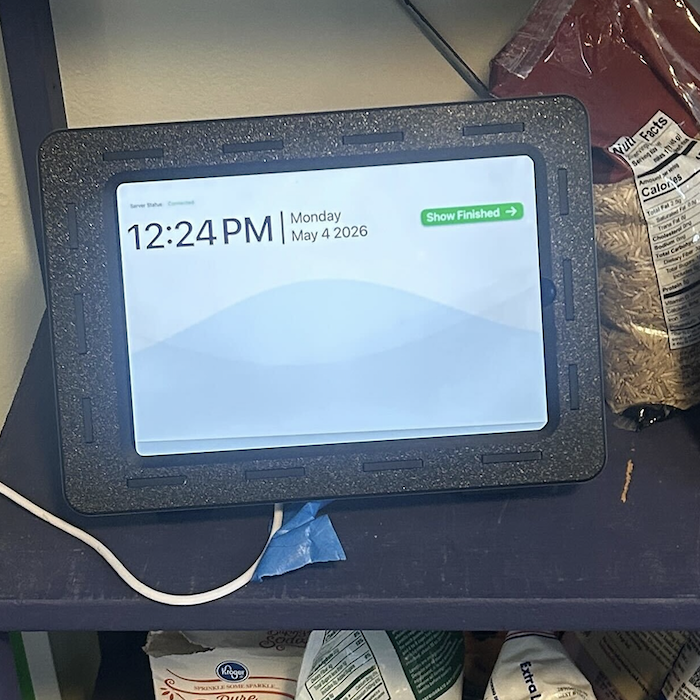
At Home Technologies to Assist Older Adults Aging In Place
In collaboration with other researchers in AI-CARING, we are a taking user-centric approach to design systems that tackle challenges faced by older adults at home. Our lab focuses on providing real-time support through an at-home always-on display [DIS’25] conditioned on the home state measured by privacy preserving sensors [Preprint]. We are currently in the process of long-term evaluation.
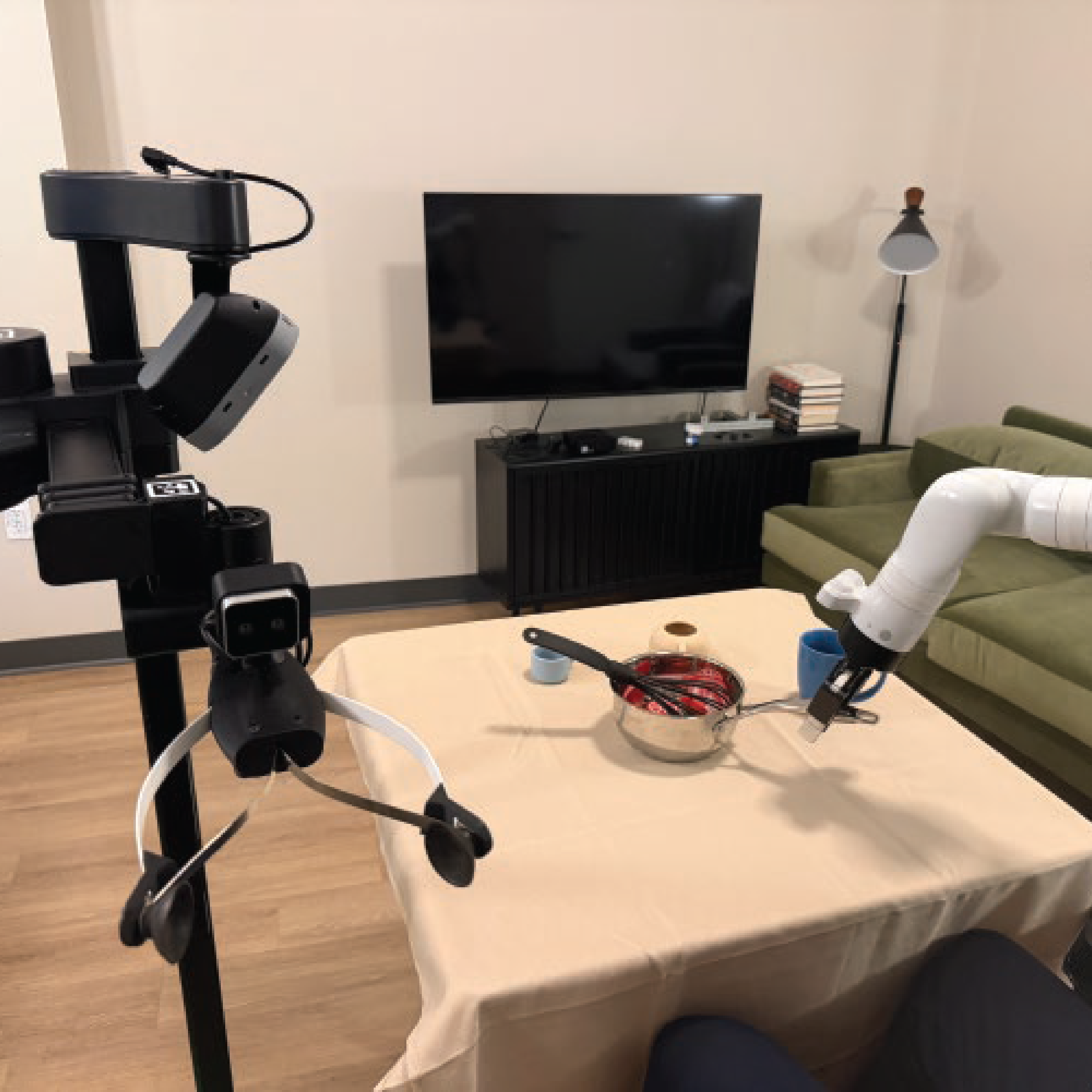
Algorithms and Systems in Multi-Robot Human-Robot Interaction
The addition of more robots to an human-robot interaction increase its complexity. What new algorithms and systems we need to create to make them work better together? We are exploring how human commands and constraints can be intergrated into Multi-Agent Reinforcement Learning settings [Preprint]. In collaboration with RIVeR lab, we created a novel method for a second robot to join in existing interaction to help a robot arm complete bi-manual tasks [ISRR’26].

Creating Tools and Materials to Support Real World Research
Robots and AI technologies are increasingly becoming part of our daily lives. It is more important than ever to bring research out of the lab into the real world. In this line of work, we created an expert-informed checklist [Preprint] that researchers can use to help identify potential pitfalls.
Human Perception of Multi-Robot Systems
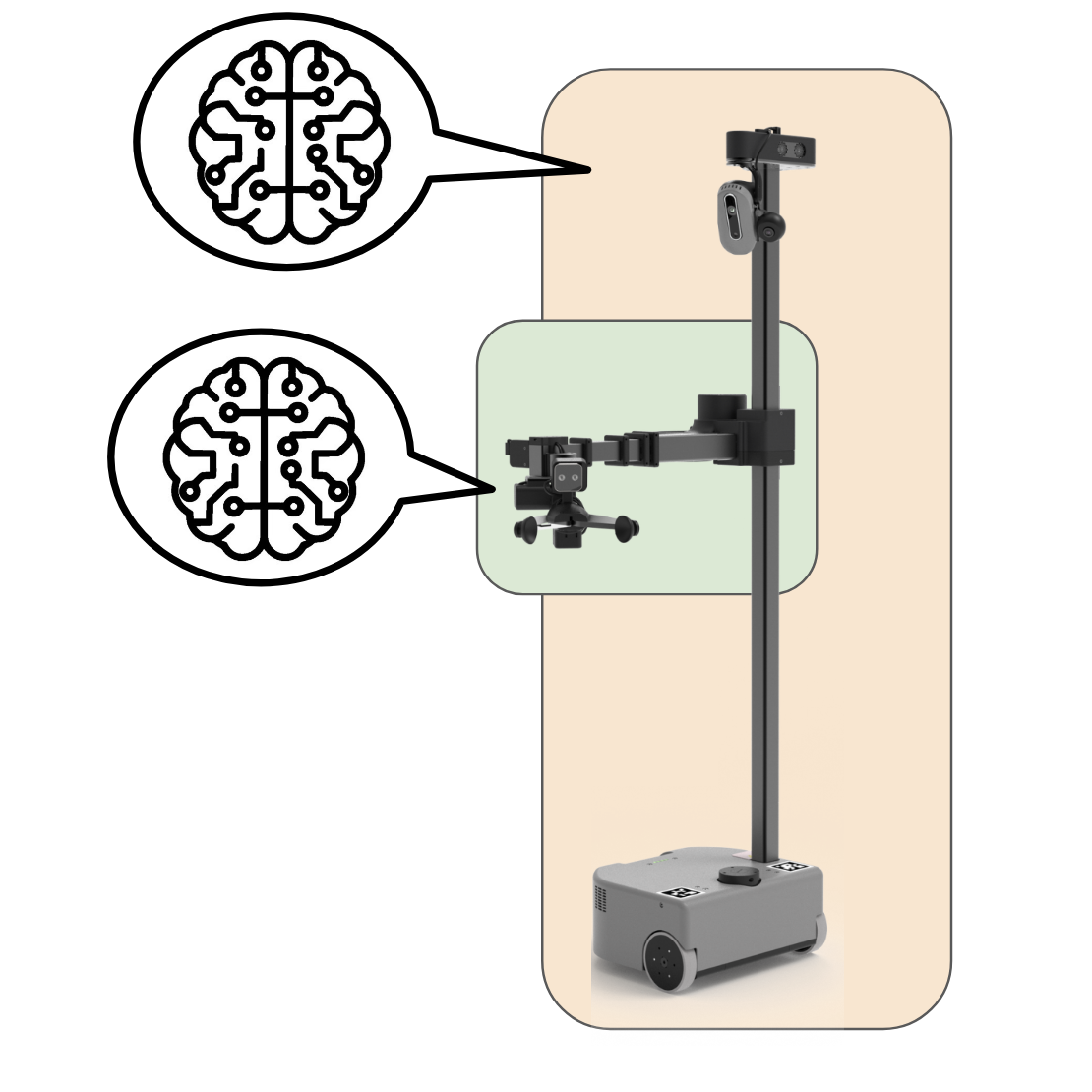
Unlike humans, a robot’s presence/identity is not restricted to the same body. We have investigate how users perceive different configurations – from robots’ identities jumping and co-existing in multiple bodies [DIS’19] to two identities controlling different part of the a robot [HRI’26]
Leveraging Other Intelligent Systems in Human-Robot Interaction
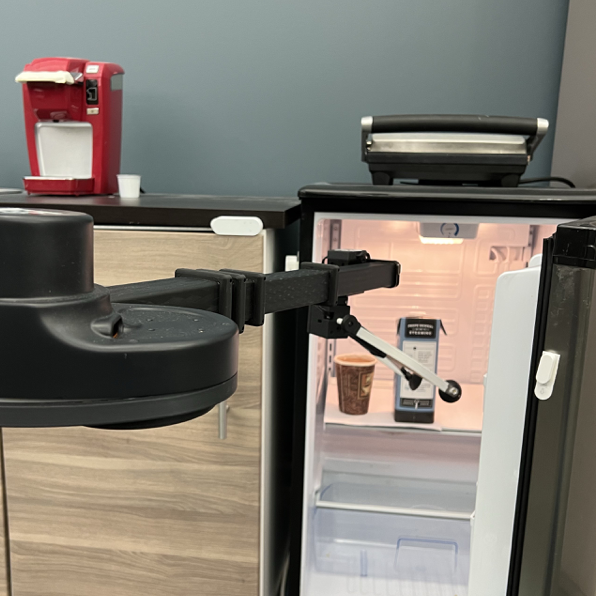
Future human-robot interactions are likely to take place in environments with other intelligent systems, such as screens and smart home sensors. In past work, we demonstrated a HRI system that takes advantage of a co-located 50-inch touch screen and manages users’ attention between the robot and the touch screen [HRI’20 LBR]. Our on-going work explores how robots can leverage additional knowledge from smart home sensors to improve robots’ efficiency.
Past Projects
Assistive Navigation Robots in Complex Indoor Spaces
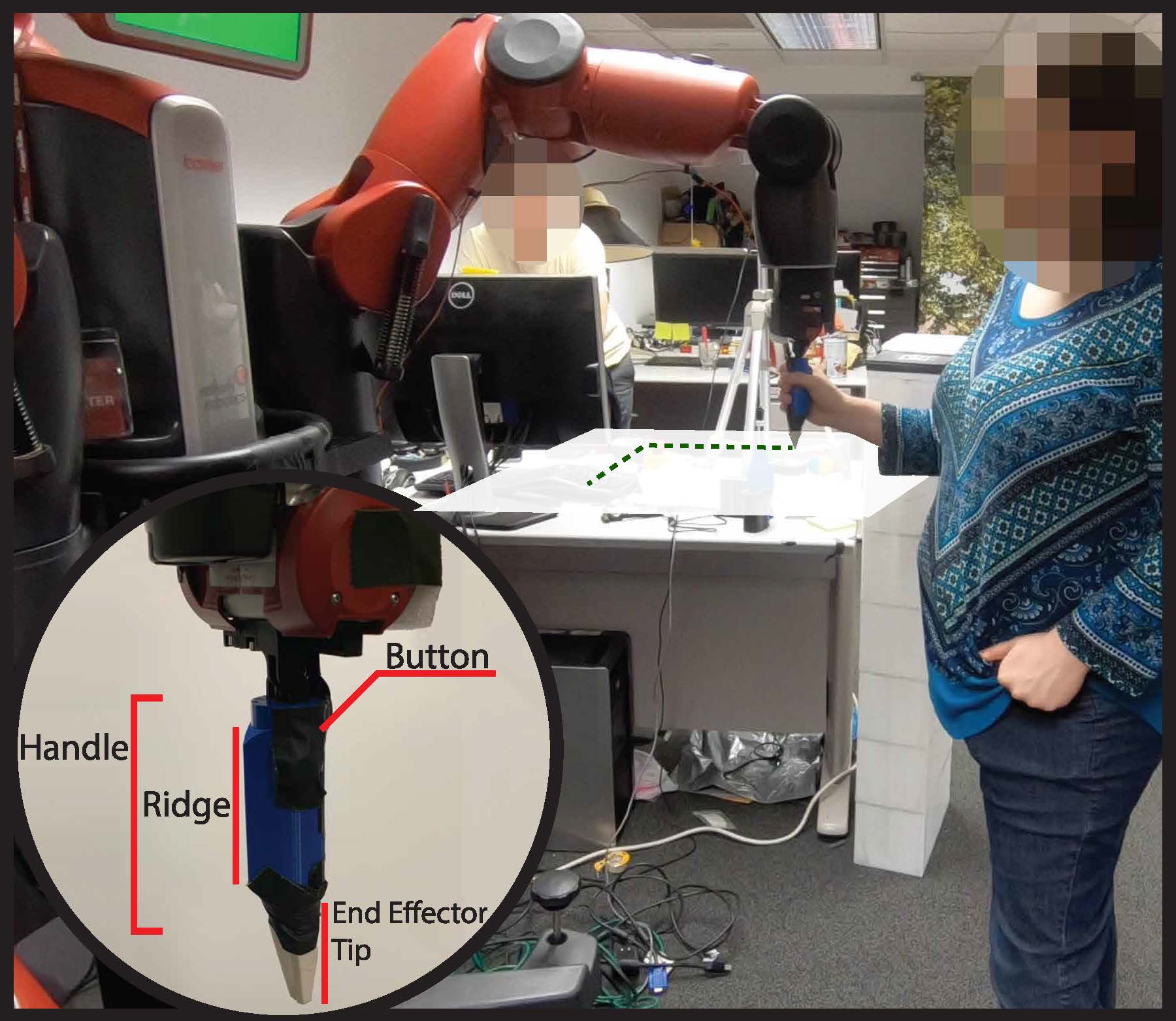
Indoor navigation in complex, unfamiliar spaces remains difficult for people with visual impairments. In this line of research, we explored how various types of robots could help people navigate indoor spaces. We explored and designed algorithms for mobile robots [IROS’19, ASSETS’21 LBR], stationary manipulators [ASSETS’19], and small spherical robots [RO-MAN’18].